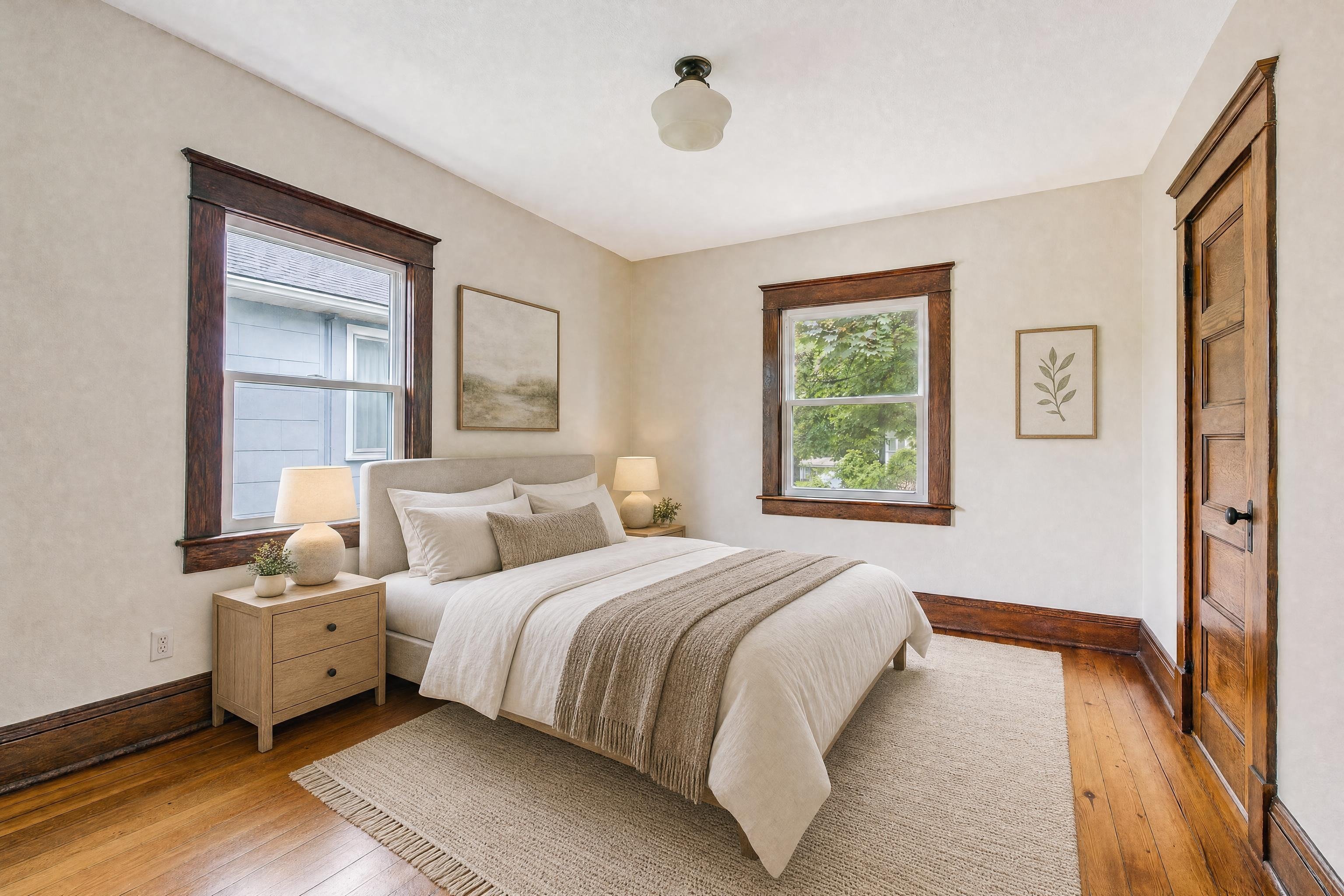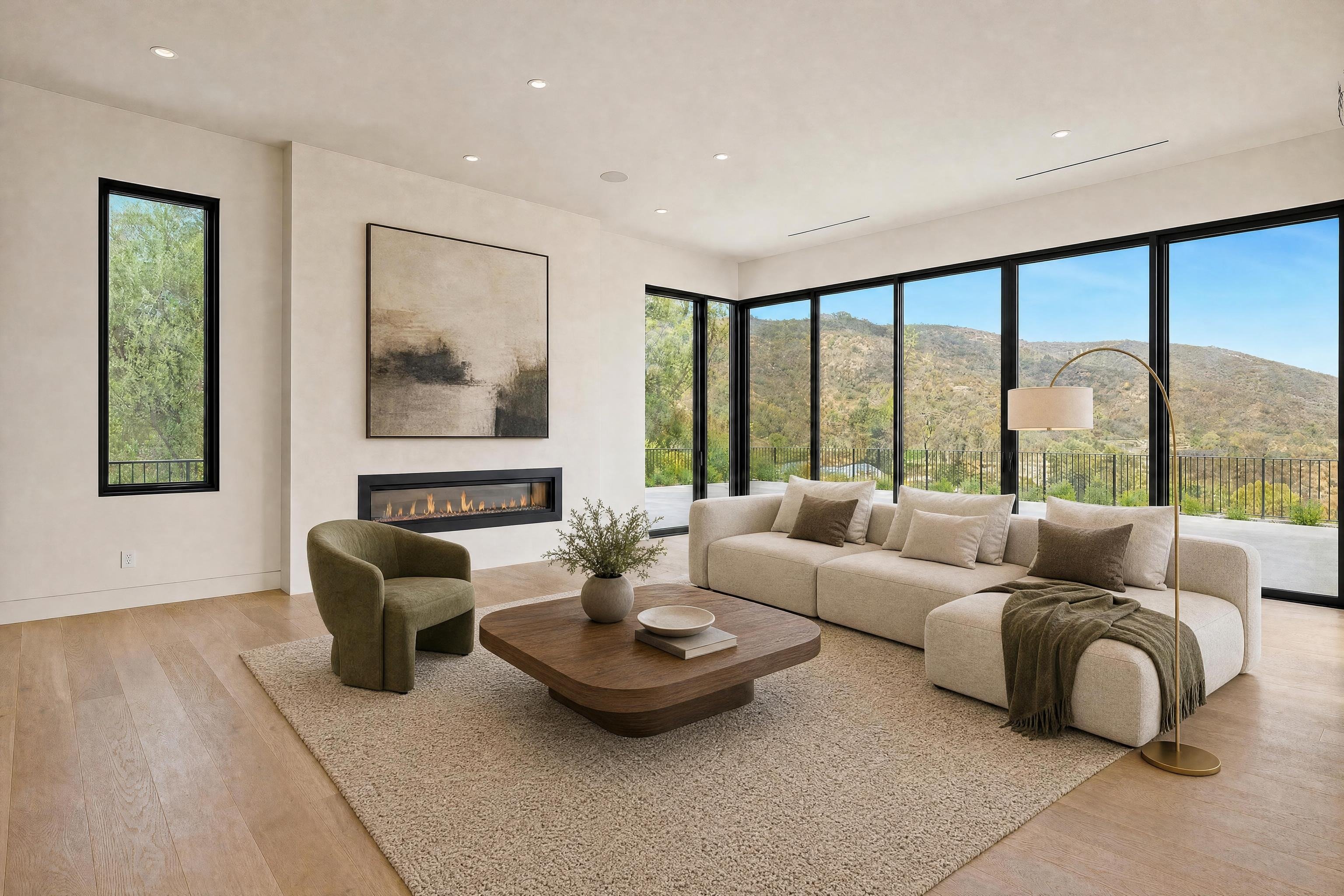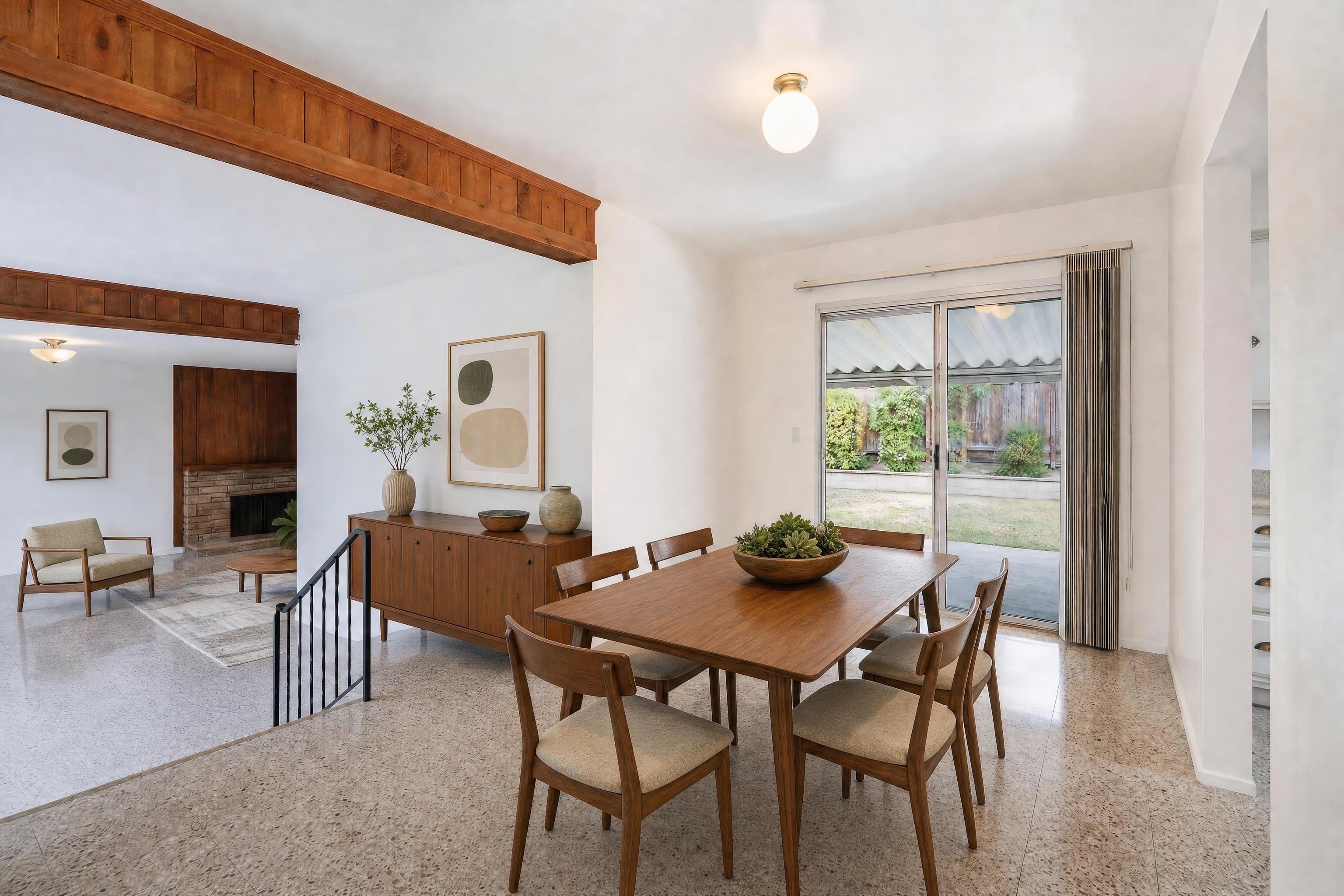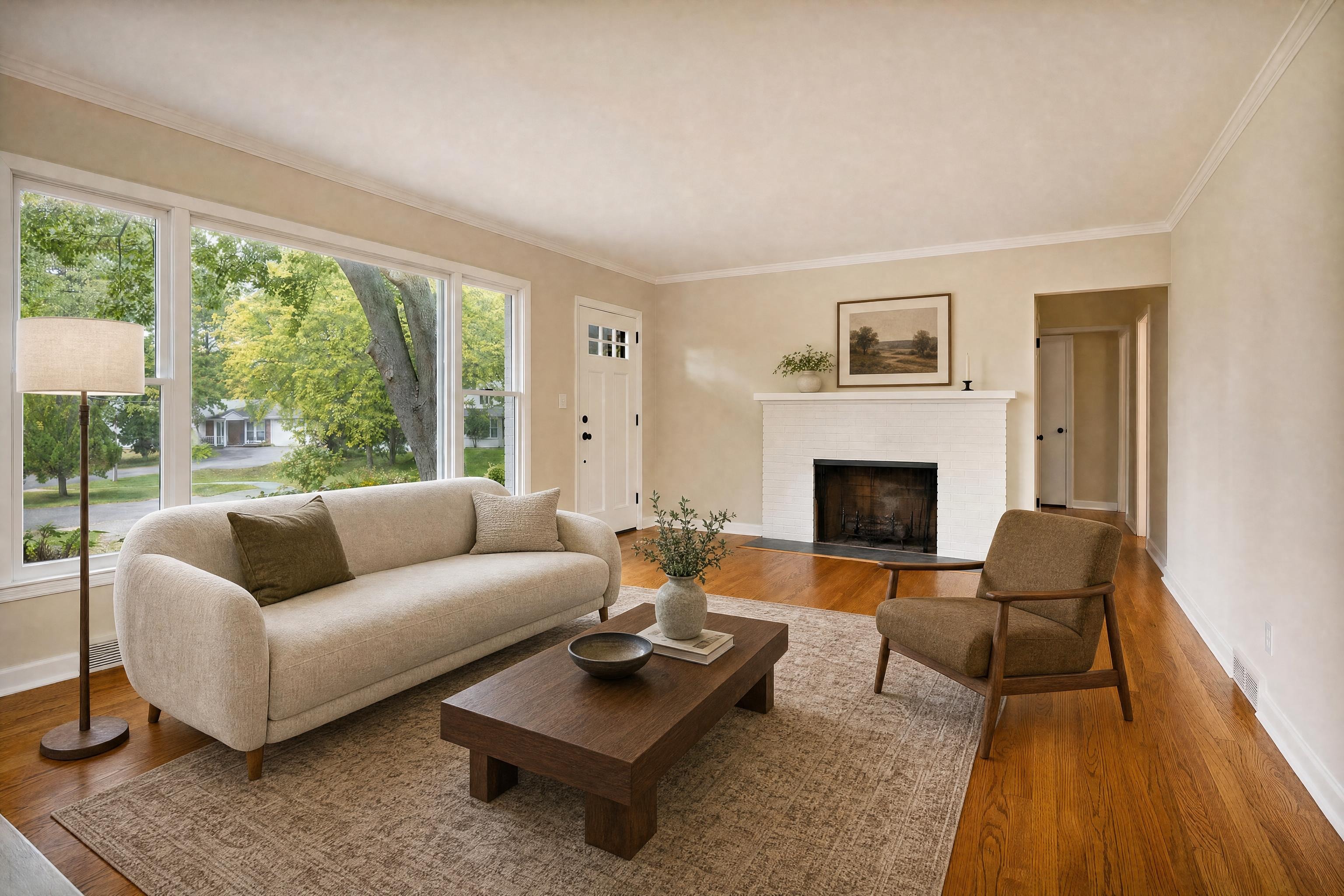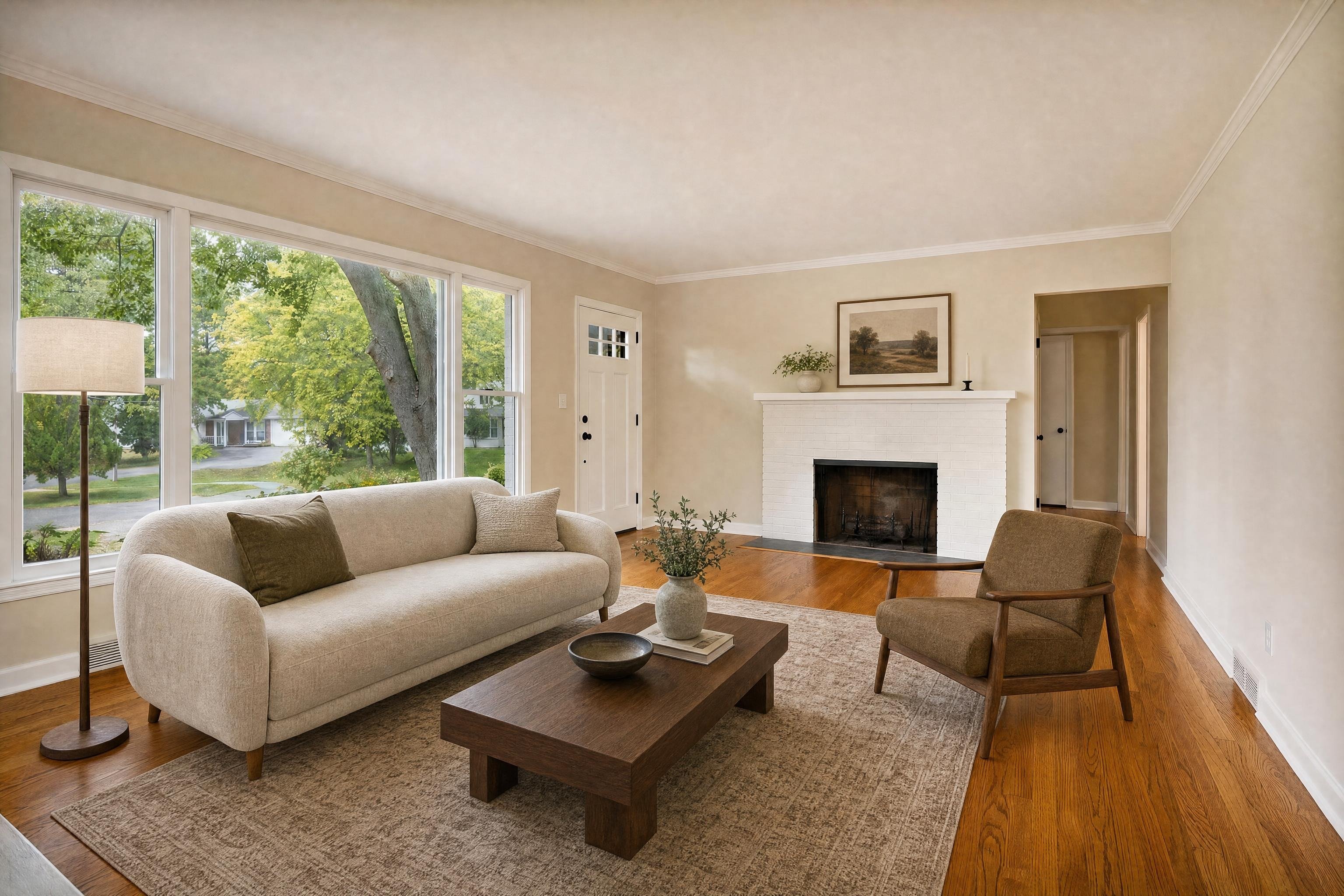
Virtual staging is adding furniture and decor to a photo of an empty room with software, so buyers can see how the space could be used. With AI it takes under a minute, and you can try 10 photos free.
What is virtual staging in real estate?
In real estate, virtual staging means furnishing listing photos digitally instead of moving furniture into the home. The room is photographed as it is, then sofas, beds, rugs and decor are added in software to match the room's perspective and light.
Agents use it to make vacant listings easier to picture. Photographers sell it as an add-on to the shoot. Property managers and builders use it to show empty units and spec homes furnished.
What does virtually staged mean?
It means the furniture in the photo was added digitally. The room itself, with its walls, windows, floors and fixtures, is shown as it is. Only the furnishings are virtual, which is why virtually staged photos are usually labeled on the listing.
What is virtual home staging?
Virtual home staging is the same idea applied to houses, condos, apartments and rentals. The term is often used by sellers and homeowners, while agents tend to say virtual staging. Both mean digital furniture in real photos.
How virtual staging works, step by step
What virtual staging is used for
What virtual staging costs
Virtual staging is priced per photo. AI tools like Stagingmate cost from $0.35 to $0.95 a photo, with plans from $19/month for 25 photos, and the first 3 are free. Physical staging is priced per home, usually with a monthly furniture rental on top.
How virtually staged photos are labeled
Most agents add a short "virtually staged" note to the caption and include the original photo alongside it. It's common practice on MLS listings and takes seconds. Our disclaimer guide has sample wording you can copy.