- Data source
- Public websites linked from US Google Maps listings in the home staging service category, read page by page with robots.txt respected, plus the category and region from each listing
- Collected
- November 2026
- Sample
- 1,224 websites read; 628 qualify as stager websites, 623 with a known region
Key findings
- 1Modern is the most-named of the home staging styles, on 40.9% of 628 US stager websites.
- 2Contemporary and traditional follow, each on 15.4% of stager websites, then coastal on 9.2% and transitional on 8.4%.
- 352.4% of stager websites name at least one design style, so almost half name none.
- 450.6% of stager websites use luxury or high-end language, and 57.2% of those name modern, against 24.2% of other firms.
- 5Trend styles are rare: Scandinavian appears on 1.8% of stager websites and Japandi on 0.2%.
- 6Modern runs highest in the West, on 46.4% of stager websites, and coastal highest in the South, on 12.8%; no Midwest stager site we read names coastal or farmhouse.
Summary
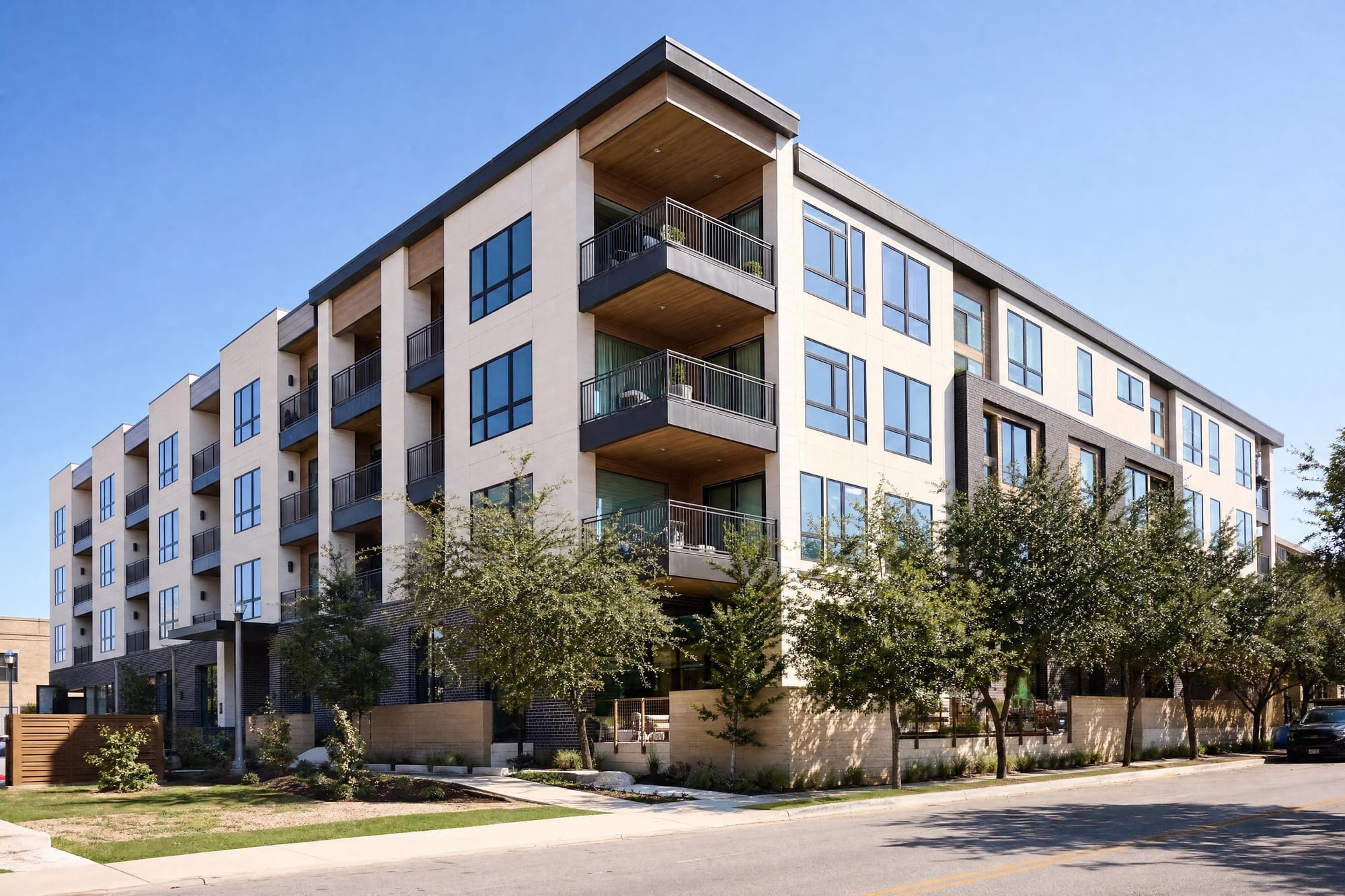
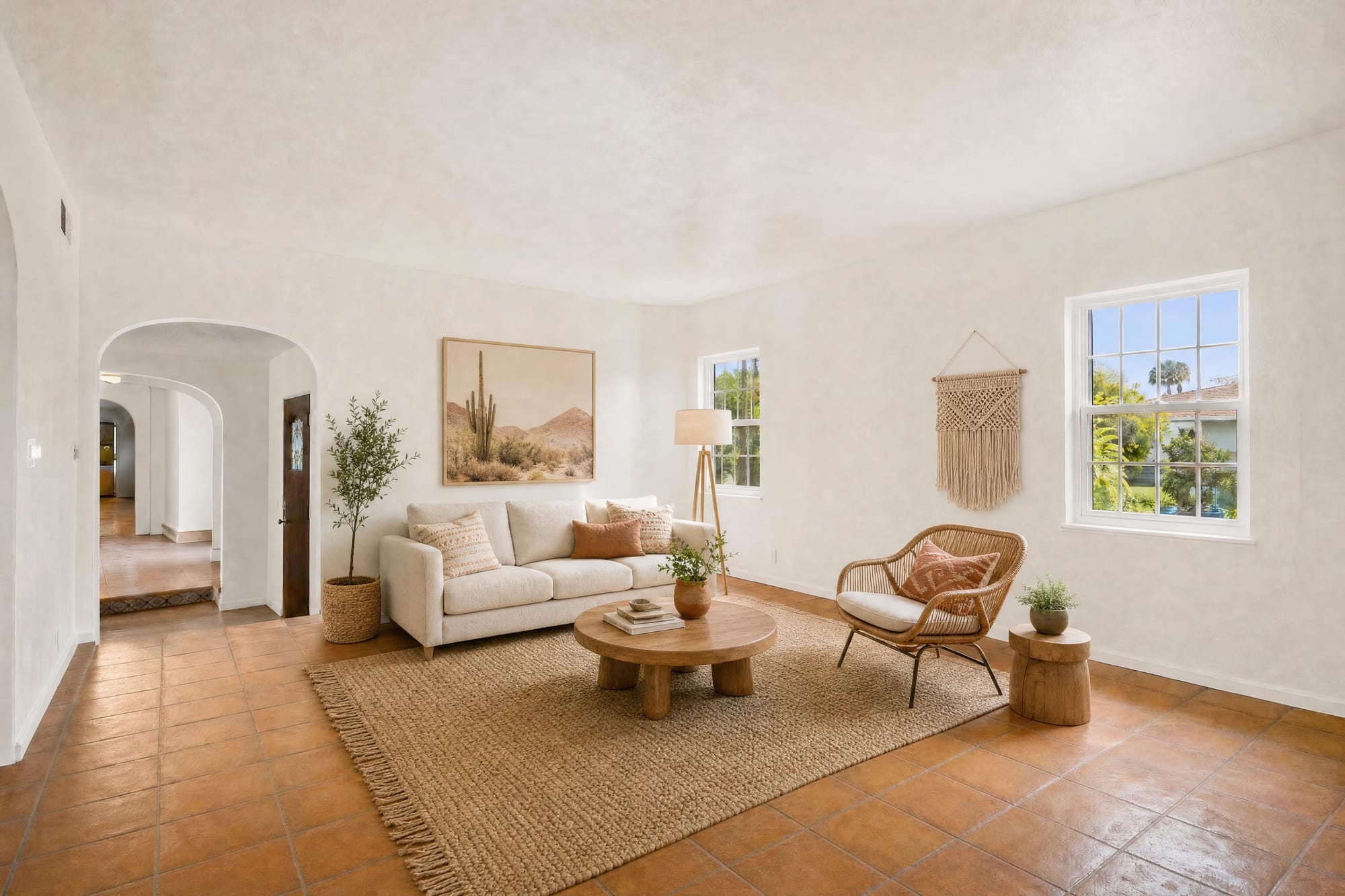
An agent is lining up a stager for a new-build townhouse with white walls and black window frames. She scrolls through four stager websites. Each shows a portfolio of bright, neutral rooms, and three of them describe their look as modern. Only one mentions any other style by name.
Style is how stagers set themselves apart and how they match a home to its likely buyers. Agents and designers want to know which looks the trade leads with, and stagers want to know whether a niche style is crowded or open. The words stagers use on their own websites are a public record of what they choose to advertise. This study reads 628 stager websites for 13 named design styles and for luxury language.
Modern dominates. 40.9% of stager websites use the word, against 15.4% each for contemporary and traditional and under 10% for every other style. Half of sites, 50.6%, describe their work as luxury or high-end, and those firms name modern, transitional and coastal far more often than the rest. Trend styles barely register, with Scandinavian at 1.8% and Japandi at 0.2%.
What we measured
In November 2026 we took the websites linked from US Google Maps listings in the home staging service category, 1,224 sites, and read the public pages of each: the homepage and up to three inner pages about services, pricing, the business, its portfolio or its process. We read robots.txt first and skipped any page it disallowed; 30 sites disallowed reading. We kept a site as a stager if it had at least 300 characters of readable text and either its Google listing's main category is home staging service or its pages talk about home staging. That left 628 stager websites, 71.7% of them from listings whose main category is home staging.
A site names a style when its pages use the word: modern (not followed by farmhouse), transitional, contemporary, traditional, coastal, farmhouse or modern farmhouse, mid-century, Scandinavian, boho or bohemian, minimalist or minimalism, industrial, rustic and Japandi. We counted luxury or high-end language separately, since it describes a market rather than a look, and split the sites into the 318 that use it and the 310 that do not. Regions follow the four US Census regions, with 82 sites in the Northeast, 84 in the Midwest, 218 in the South and 239 in the West.
Limits: a mention of a word is not always a style offer. Modern can describe furniture, an approach or a process, and traditional often appears in the phrase traditional staging, meaning physical rather than virtual staging, so both shares run higher than the share of stagers that offer those looks. The rules read words, not portfolio photos, so a stager whose rooms are clearly coastal but never says so is not counted. This edition does not compare the styles stagers name with how often buyers search for them.
Modern is named on 40.9% of stager websites
of US stager websites use the word modern
Modern leads the home staging styles by a wide margin, on 40.9% of 628 stager websites. Contemporary and traditional tie for second at 15.4%, then coastal at 9.2%, transitional at 8.4% and mid-century modern at 6.2%. Every other style appears on fewer than 6% of sites.
Modern appears on more stager websites than the next two styles combined.
Modern is also the broadest word on the list. It can name a look, describe furniture or simply mean up to date, so its share overstates how many stagers sell a strictly modern style. Even so, it is the word stagers reach for first when they describe their rooms, and the clean, neutral rooms most portfolios show fit it.
Almost half of stager websites name no style at all
of US stager websites name at least one design style
52.4% of stager websites name at least one of the 13 styles, which leaves 47.6% that name none. Many stagers describe their work by result, such as a home that sells faster or rooms that photograph well, and let the portfolio show the look rather than label it.
The trend styles that fill design feeds are rare on stager websites. Boho appears on 2.4%, Scandinavian on 1.8% and Japandi on 0.2%, a single site in the sample. Staging aims at the widest pool of buyers, so stagers favor familiar, neutral words over styles that might narrow the appeal of a home.
Luxury-focused stagers name modern more than twice as often
of stager websites with luxury language name modern, against 24.2% of others
Half of stager websites, 50.6%, describe their work as luxury or high-end. Those 318 firms name every style more often than the 310 that do not. 57.2% name modern against 24.2%, 20.1% name traditional against 10.6%, 15.1% name coastal against 3.2%, and 14.5% name transitional against 2.3%.
| Group | Sites | Modern | Traditional | Coastal | Transitional |
|---|---|---|---|---|---|
| Use luxury or high-end language | 318 | 57.2% | 20.1% | 15.1% | 14.5% |
| Other stager websites | 310 | 24.2% | 10.6% | 3.2% | 2.3% |
Source: Stagingmate analysis of 628 US home stager websites · public pages, November 2026
Part of the gap is length: firms that describe their work in detail use more style words of every kind. The transitional gap is the widest in relative terms, six times as common among luxury firms. Transitional, a blend of traditional shapes and modern finishes, is the look stagers often use in higher-priced homes where buyers expect warmth as well as polish.
The West leads on modern and the South on coastal
of stager websites in the West name modern
Modern is named on 46.4% of stager websites in the West, against 40.2% in the Northeast, 39.4% in the South and 29.8% in the Midwest. Coastal is highest in the South, at 12.8%, and in the Northeast at 9.8%. No Midwest stager site we read names coastal or farmhouse, and the West has the highest farmhouse share at 5.4%.
| Region | Sites | Modern | Coastal | Farmhouse |
|---|---|---|---|---|
| West | 239 | 46.4% | 9.2% | 5.4% |
| Northeast | 82 | 40.2% | 9.8% | 3.7% |
| South | 218 | 39.4% | 12.8% | 1.4% |
| Midwest | 84 | 29.8% | 0% | 0% |
Source: Stagingmate analysis of 623 US home stager websites with a known region · public pages, November 2026
Coastal is a look built around light colors, natural textures and water views, so its absence from Midwest sites and its lead in the South are what a reader might expect. The regional gaps in modern are smaller, from 29.8% to 46.4%, and modern is the most-named style in every region.
What this means for stagers and agents
For stagers, modern is crowded and most other home staging styles are open. With 40.9% of stager websites naming modern and 47.6% naming no style, a firm that names and shows a second style, such as transitional or coastal, stands out on the page. A look such as transitional virtual staging sits between modern and traditional, which is why it appeals to the widest group of buyers and why luxury firms name it six times as often as others.
For agents, ask a stager to show rooms in the style that suits the house rather than relying on the label. A firm that says modern may still stage a traditional home well, and the portfolio is a better guide than the words on the site.
For anyone choosing a look, the rarity of trend styles is a signal. Scandinavian and Japandi appear on 1.8% and 0.2% of stager websites, so the trade's view is that broad, neutral styles sell homes to the most buyers.
If you want to see a room in more than one style before deciding, staged photos make it cheap to compare. See examples of virtual staging for dining rooms in different styles.
Cite and download
Stagingmate Research. (2026). Home Staging Styles: Modern Leads on 41% of Stager Sites. Stagingmate. https://stagingmate.com/research/design-styles-home-stagers-advertise
Free to use and republish, as long as you credit Stagingmate Research with a link to this page. Need a local cut or a quote? Email support@stagingmate.com.
Frequently asked questions
Modern. 40.9% of 628 US stager websites use the word, against 15.4% each for contemporary and traditional and 9.2% for coastal.
8.4% of stager websites name transitional, rising to 14.5% among firms that describe their work as luxury or high-end, against 2.3% of other firms.
Not on stager websites. Modern farmhouse or farmhouse appears on 3% of sites, with the highest share in the West at 5.4% and none in the Midwest sites we read.
Rarely. Scandinavian appears on 1.8% of stager websites, boho on 2.4% and Japandi on 0.2%. Stagers favor broad, neutral looks that suit the most buyers.