- Data source
- Google Maps business listings in the home builder and custom home builder categories, and the public homepage and up to 3 inner pages of each builder's own website, read with robots.txt respected
- Collected
- November 2026
- Sample
- 782 builder websites from listings in all 50 states, about 30 listings per state; 673 had readable text and every share is out of those 673
Key findings
- 111.1% of 673 home builder websites label some images as renderings, artist's conceptions or illustrations.
- 261.8% of builder websites point visitors to a photo gallery or portfolio, more than five times the share that labels renderings.
- 314.9% of builder websites mention model homes, the usual source of model home photos for a new community.
- 4Only 10.8% of builder websites offer a 3D or virtual tour, against 14.9% of production builders and 8% of custom builders.
- 5Custom and production builders use rendering language at almost the same rate, 11.1% and 11.3%.
- 6Midwest builder websites use rendering language most often, at 15.2%, against 8.1% in the Northeast.
Summary
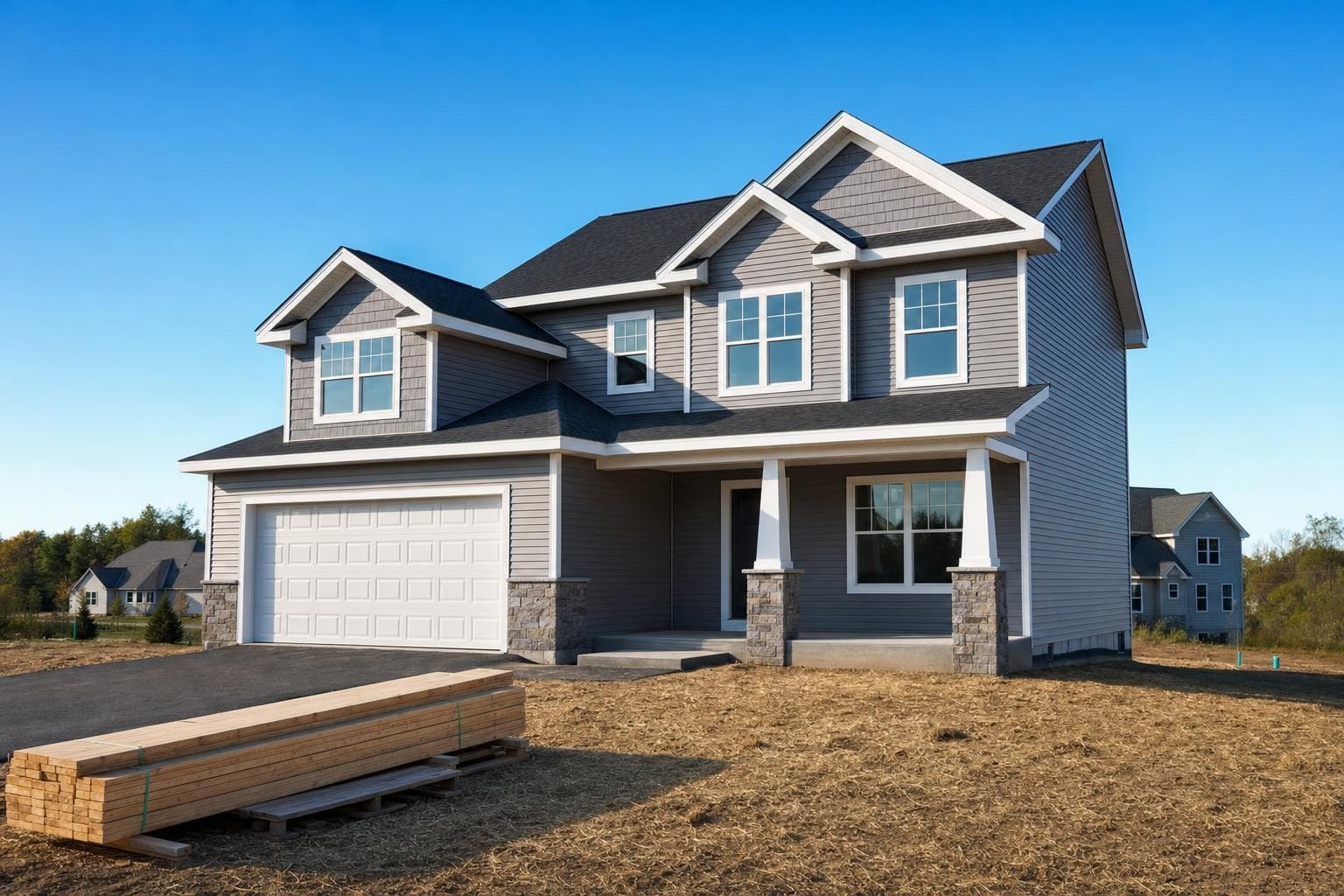
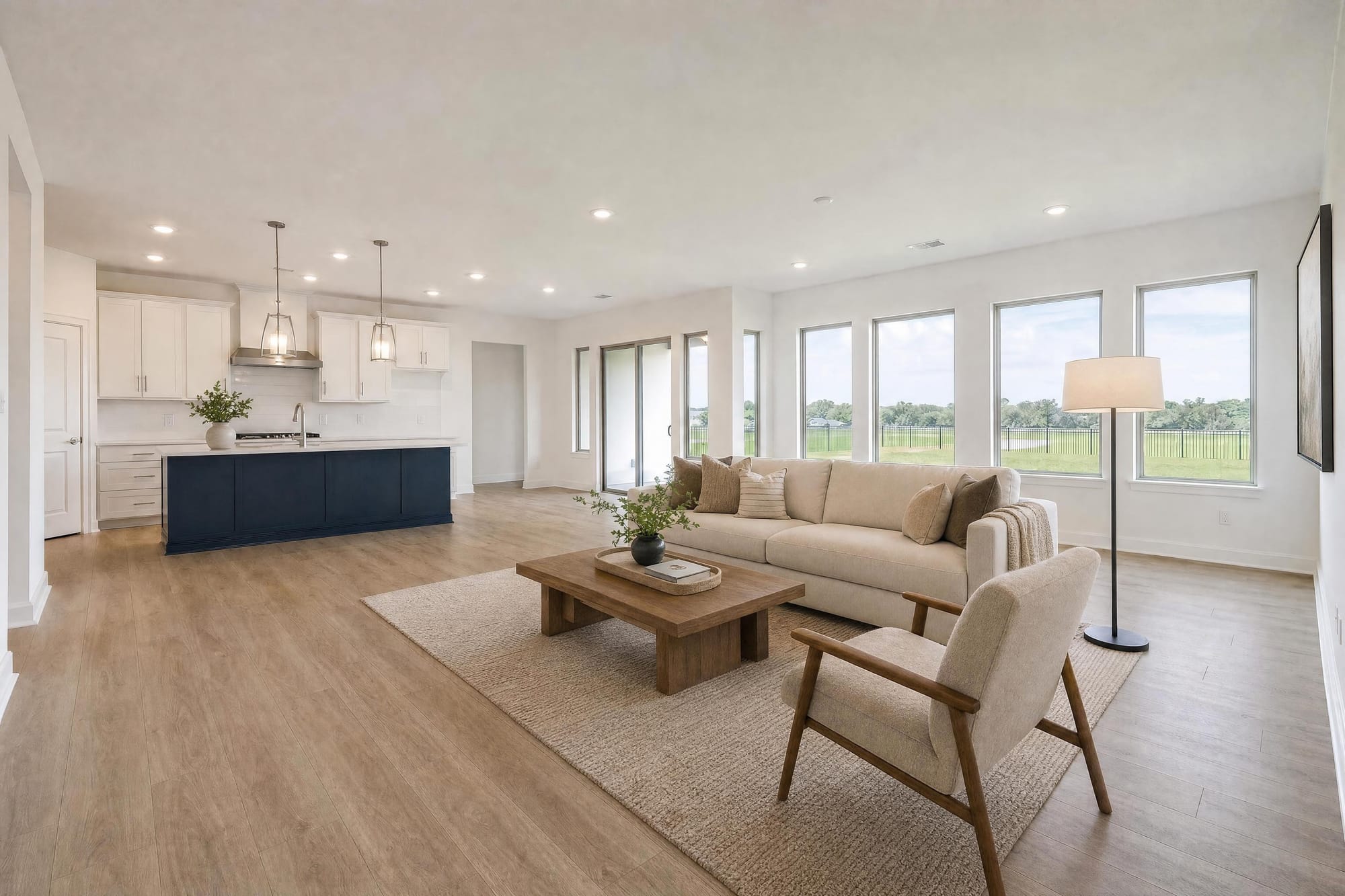
A buyer clicks through to a builder's new community from a search. The first image is a bright kitchen with a long island and pendant lights. Scroll down and a small line under the picture says the image is an artist's rendering and finishes may vary. The next page, a gallery of finished homes, has no such line: those are real rooms, photographed after the build.
Builders sell homes that often do not exist yet, so they have two ways to show them: photos of a finished model or a past project, and renderings drawn from the plans. Each has a cost. Model home photos need a built, furnished house, and renderings need a buyer to trust a drawing. There is little public data on which one builders actually lead with, so we read the public websites of 673 builders across all 50 states and counted what they show.
Photos win by a wide margin. 61.8% of builder websites point to a photo gallery or portfolio, and 14.9% mention model homes, while 11.1% label any image as a rendering or illustration. Tours are rarer still, at 10.8%. Custom and production builders use renderings at about the same rate, but production builders are almost twice as likely to offer a tour, 14.9% against 8%.
What we measured
In November 2026 we took Google Maps business listings in the home builder and custom home builder categories, about 30 per state in all 50 states, and kept those with their own website, one per domain, setting aside social media pages and directory profiles. We kept listings whose Google category names a builder, construction company or contractor, which left 782 websites. For each one we read the homepage and up to 3 inner pages picked from its links, such as model, community, floor plan, gallery, tour and design center pages, without running scripts. We read robots.txt first and skipped any page it disallows. 673 sites had at least 300 characters of readable text; the other 109, including 9 that disallow reading in robots.txt, are left out, and every share is out of the 673.
Images were not classified visually. A site counts as using renderings when its text labels images as renderings, rendered, an artist's rendering or conception, conceptual, elevation images or drawings, or says images are for illustration or representative only. A photo gallery means the words gallery, photo gallery or portfolio. A model home mention means the words model home or an invitation to tour the model. A tour means a 3D or virtual tour player from a known tour host in the page code or links, or text offering a 3D, virtual or interactive tour, walkthrough or model, or a 360 tour. Custom builders are those whose Google category says custom or whose homepage describes custom homes or custom builds; the rest are production and other builders. Regions are the four US Census regions.
Limits: the rules read words, not pictures, so a site that shows renderings without labeling them counts as having none, and a gallery link does not prove the gallery holds photos rather than drawings. The study reads up to 4 pages per site, so renderings on deeper community pages may be missed. Listings are the ones Google returns first in each state, about the same number per state, so national figures weight states equally. This edition does not measure how many images each site shows or how old they are.
Galleries are on 61.8% of builder sites, renderings on 11.1%
of home builder websites point visitors to a photo gallery or portfolio
The most common way a builder website shows its homes is a gallery. 61.8% of the 673 sites have a gallery, photo gallery or portfolio, usually a set of finished projects or completed rooms. Rendering language is far rarer: 11.1% of sites label an image as a rendering, an artist's conception or an illustration, or warn that images are representative only.
Builder sites lead with galleries of real work; renderings and tours each appear on about one site in nine.
The gap reflects how most builders work. Many of the businesses in Google's home builder categories build a few houses a year, often to order, and their best sales material is the last house they finished. A gallery of completed kitchens and exteriors does that job. Renderings matter most when the home has not been built, which is why the label tends to sit on community and floor plan pages rather than on a portfolio.
Model homes appear on 14.9% of builder sites
of home builder websites mention model homes or invite visitors to tour a model
A model home is the builder's showroom: a finished, furnished house in the community that buyers can walk through and photographers can shoot. 14.9% of builder websites mention a model home or invite visitors to tour the model. That is a little more than the 11.1% that use rendering language, so on the typical builder site a real model and a drawn image are about equally likely to come up.
Model home photos are expensive to produce. The house has to be built, finished and furnished before a single picture is taken, and it ties up a lot that could be sold. Builders without a model, or selling a plan that has never been built, fill the gap with renderings, with photos of a similar home they finished elsewhere, or with nothing at all. The share of sites with a model home mention sets a rough ceiling on how many builders can show buyers a furnished room of the house they are actually selling.
Custom and production builders use renderings at the same rate
of custom and of production and other builder sites use rendering language
Rendering language is almost identical across the two kinds of builder. 11.1% of the 398 custom builder sites and 11.3% of the 275 production and other builder sites label images as renderings or illustrations. Custom builders draw the house before it exists because the buyer is designing it; production builders draw it because the community is not finished. Both end up with the same share of drawn images.
| Builder type | Sites | Rendering language | 3D or virtual tour |
|---|---|---|---|
| Custom builders | 398 | 11.1% | 8% |
| Production and other builders | 275 | 11.3% | 14.9% |
| All builders | 673 | 11.1% | 10.8% |
Source: Stagingmate analysis of 673 US home builder websites · public pages read November 2026
Tours split the two groups. 14.9% of production and other builder sites offer a 3D or virtual tour, almost twice the 8% of custom builder sites. A production builder can scan one model and use the tour for every buyer of that plan, while a custom builder's next house is different from the last, so a tour of a past project shows the builder's work rather than the buyer's home.
Midwest builder sites use rendering language most, at 15.2%
of Midwest home builder websites label images as renderings or illustrations
Rendering language is most common on Midwest builder sites, 15.2% of 158, followed by the West at 12.5% of 184. The South, at 8.7% of 196, and the Northeast, at 8.1% of 135, sit lower. Every region has at least 135 sites, but the differences are a few percentage points, so they describe a tilt rather than a sharp regional divide.
Midwest and West builder sites use renderings more often than those in the South and Northeast.
In every region the pattern holds: most builders sell with photos of finished work, and no more than about one in seven adds labeled drawings. Regional numbers count sites by the state of the builder's Google listing, and each state contributes about the same number of builders, so a state with many builders counts no more than one with few.
What this means for home builders
Buyers expect to see real rooms. With 61.8% of builder sites leading with a gallery and only 11.1% labeling renderings, a builder whose site shows only drawings stands out, and not always in a good way. Where a model home exists, model home photos of finished, furnished rooms are the strongest material a builder has, and they work on every listing site the home appears on.
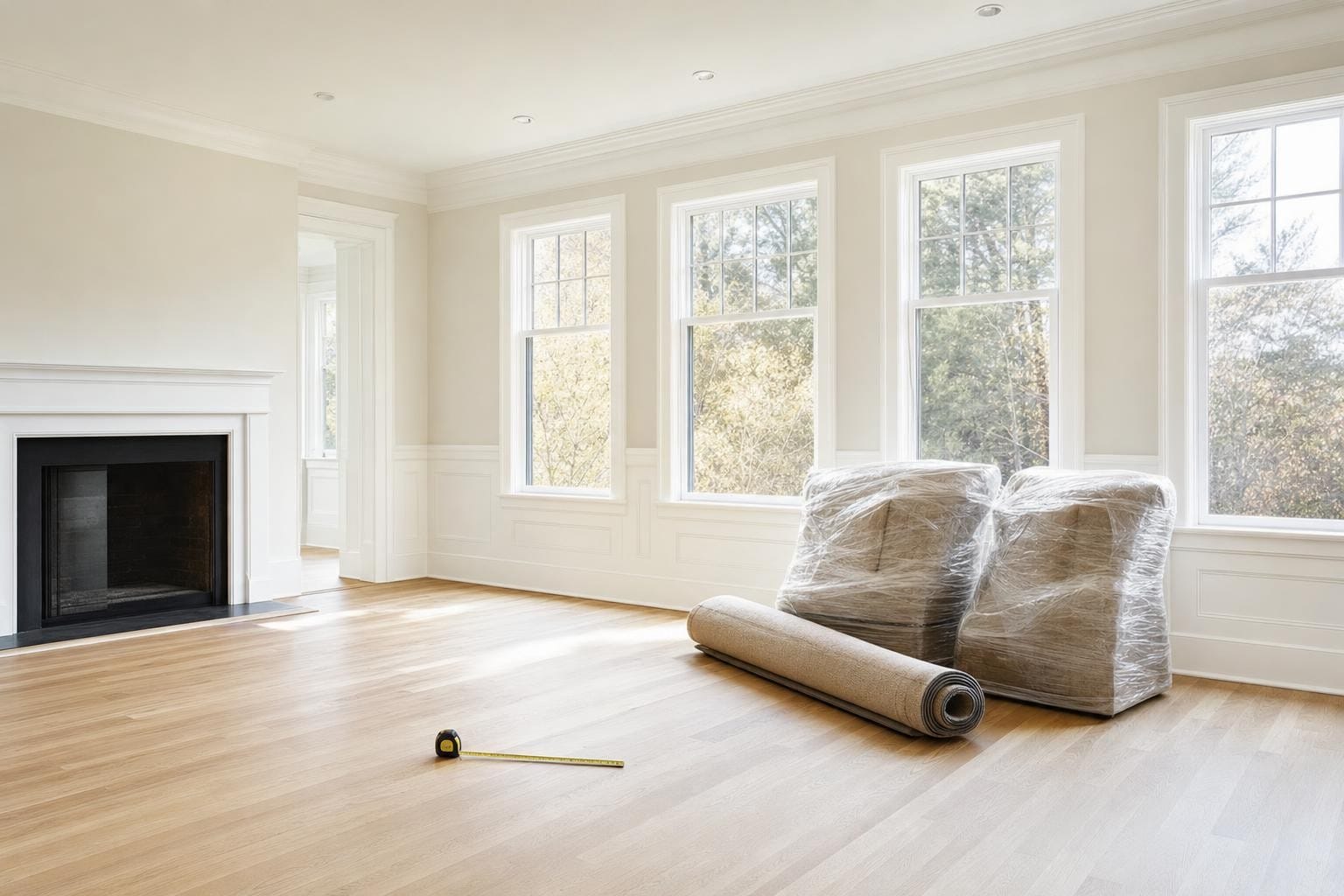
The hard case is the finished spec home with no furniture in it. The house is real, so a rendering undersells it, but empty rooms photograph as bare boxes. Our page on virtual staging for construction companies explains how builders furnish photos of a completed home without staging a physical model, which fills the gap between a drawing and a full model.
Production builders already use tours far more than custom builders, 14.9% against 8%. A custom builder with a strong portfolio can do the same with one walkthrough of a recent build, which shows the quality of the work without a model of the buyer's plan.
Do not stop at the front door. Lots, patios and yards on new homes are often bare dirt or fresh sod in the first photos, and virtual outdoor staging shows buyers how the outdoor space can be used before the landscaping grows in.
Cite and download
Stagingmate Research. (2026). Model Home Photos vs Renderings: 11% of Sites Show Renders. Stagingmate. https://stagingmate.com/research/home-builder-websites-model-home-photos-vs-renderings
Free to use and republish, as long as you credit Stagingmate Research with a link to this page. Need a local cut or a quote? Email support@stagingmate.com.
Frequently asked questions
Mostly real photos. 61.8% of 673 builder websites point to a photo gallery or portfolio, while 11.1% label some images as renderings or illustrations.
14.9% of 673 home builder websites mention a model home or invite visitors to tour a model.
No. Rendering language appears on 11.1% of custom builder sites and 11.3% of production and other builder sites.
10.8% of builder websites offer a 3D or virtual tour. The share is 14.9% for production and other builders and 8% for custom builders.
The Midwest, where 15.2% of builder websites use rendering language, followed by the West at 12.5%. The Northeast is lowest at 8.1%.