- Data source
- Answers from ChatGPT, Gemini, Claude and Perplexity to questions about which renovations pay off before selling a house, each asked once with no earlier conversation
- Collected
- November 11, 2026
- Sample
- 100 questions (20 common pre-sale renovation questions, each asked plainly and in 4 situations), asked of 4 AI assistants for 400 answers, checked for 16 project types and for return-on-investment figures
Key findings
- 1Paint is the most-named of the home improvements that increase value before a sale, recommended in 83.3% of 400 AI answers.
- 2Minor repairs are named in 77.8% of answers and lighting and fixtures in 76.3%, ahead of every large remodeling project.
- 3Kitchen updates are named in 66.8% of answers, but 17% of answers put the kitchen among projects that may not pay off, the highest caution rate of any project.
- 4All four assistants put paint in their three most-named projects, and three of the four also name minor repairs and lighting.
- 5Staging or decluttering comes up in 46.5% of answers, and only 1.5% describe it as a poor return.
- 6The 75 return-on-investment percentages in the answers have a median of 100%, with the middle half between 75% and 100%.
Summary
A homeowner plans to list in the spring and has $10,000 to spend. She asks an AI assistant which renovations will add the most value before she sells. The answer starts with fresh paint, then a list of small fixes, new light fixtures and a tidier front yard. The kitchen appears too, with a warning not to overspend on it.
AI assistants are now one of the first places sellers go for renovation advice, and what they say shapes what gets done before a listing goes live. Agents see the results at the listing appointment: sellers who have already painted, or who are halfway through a kitchen they were told would pay for itself. Knowing which home improvements that increase value the assistants recommend, and where they urge caution, tells agents what their sellers are hearing.
The assistants favor small, cheap jobs. Paint is named in 83.3% of answers, minor repairs in 77.8% and lighting and fixtures in 76.3%. Large projects come further down: kitchens at 66.8%, bathrooms at 56%, roofs at 38.8% and basements at 9.5%. The kitchen is also the project most often flagged as a poor return, in 17% of answers.
What we measured
On November 11, 2026 we asked four AI assistants 100 questions about renovating before a sale: ChatGPT running GPT 5.4 mini, Gemini 3.5 Flash, Claude Haiku 5.5 and Perplexity Sonar. The questions started from 20 that sellers ask, such as "Which renovations add the most value before selling a house?", "Should I renovate my kitchen before selling?" and "Which renovations don't pay off when selling a house?". Each was asked plainly and in 4 situations: "My budget is $10,000.", "The house is 30 years old.", "I'm selling in the next three months." and "It's a starter home.". Each question went once to each assistant with no earlier conversation, giving 400 answers, 100 per assistant. Web search was not switched on, so the answers reflect what each model returns on its own; Perplexity's Sonar model is built around web results.
We read every answer for 16 project types using fixed word rules. Paint counts when the answer mentions painting; kitchen and bathroom when it mentions those rooms; curb appeal and landscaping when it mentions curb appeal, landscaping, the front yard or the lawn; flooring when it mentions floors, hardwood, carpet or vinyl plank; minor repairs when it mentions repairs, fixing leaks or cracks, or maintenance; and lighting and fixtures when it mentions lighting, fixtures or hardware. The other types are entry doors, garage doors, windows, roofs, HVAC, decks or patios, pools, basement finishing, and staging or decluttering.
A project is named as a poor return when it appears on a line of the answer that also says it is not worth it, does not pay off, has a low or poor return, should be skipped or avoided, rarely recoups its cost, or returns the least. A return-on-investment claim is a percentage of 10% to 300% followed by words such as ROI, return, of the cost or recoup. Shares are the percentage of the 400 answers that mention a project at least once, so they add up to far more than 100%.
Limits: a mention is not always a recommendation, since an answer can name a project to warn against it, which is why the poor-return figure is reported alongside. Broad words such as repair, fixtures and hardware catch more mentions than narrow ones such as garage door, so the shares compare how often a topic comes up rather than how strongly it is urged. The study does not check the return figures against published cost and resale data, and does not record which project each figure refers to. Each question was asked once, and AI answers vary from run to run and change with model updates.
Paint is named in 83.3% of AI answers
of 400 AI answers about renovating before a sale mention paint
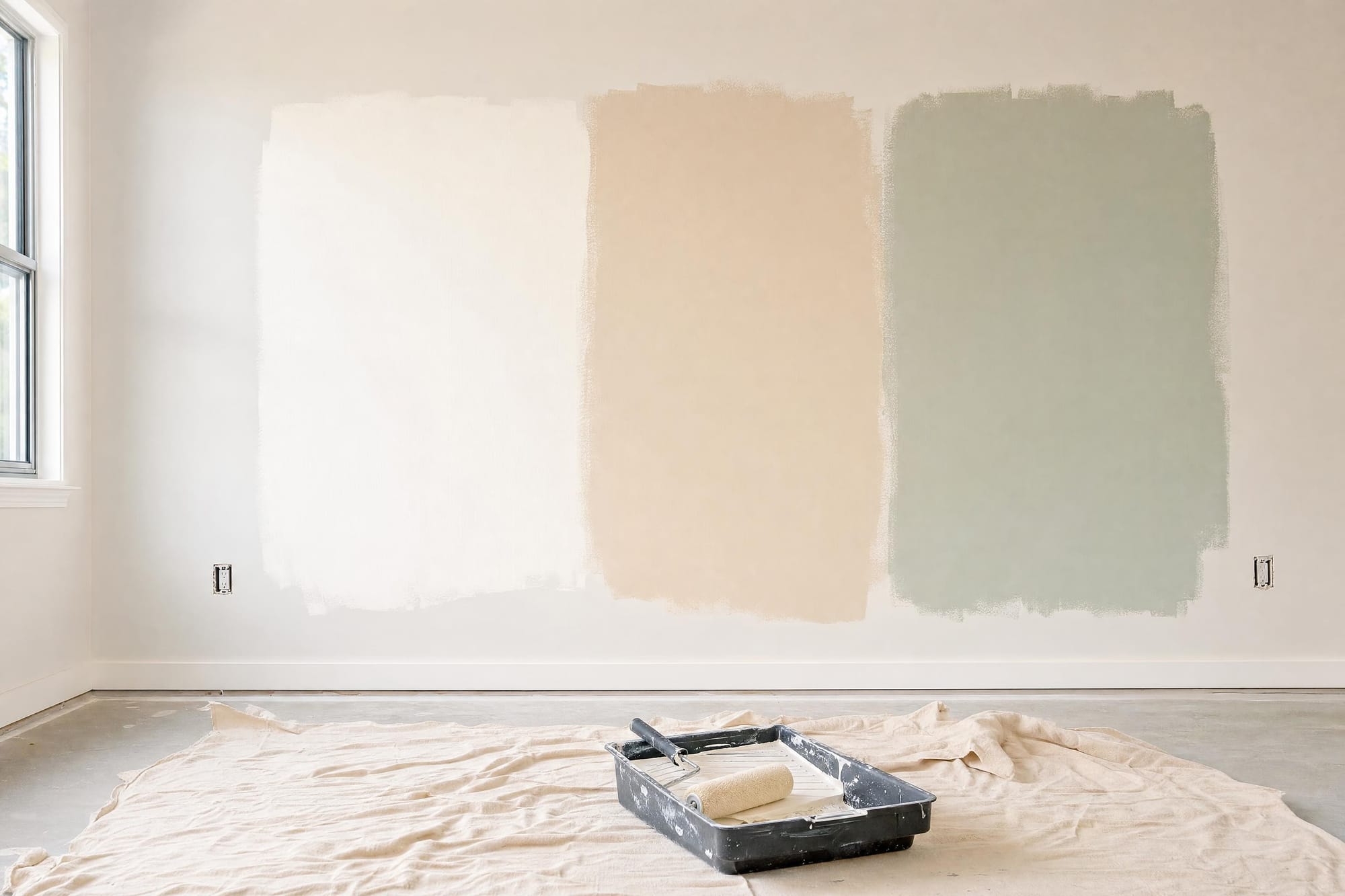
Paint is the project AI assistants name most when sellers ask which renovations pay off. It appears in 83.3% of the 400 answers, far more than the 20 answers to the one question that asks about painting. Minor repairs follow at 77.8%, lighting and fixtures at 76.3% and curb appeal and landscaping at 69.5%.
The four most-named projects are all small jobs a seller can finish in days.
Small jobs outrank large remodels in AI advice
of answers mention finishing a basement, the least-named of 16 projects
The pattern in the list is size. The four most-named projects, paint, repairs, lighting and curb appeal, are jobs a seller can finish in a weekend or a week. Larger projects come lower: a kitchen update at 66.8%, a bathroom update at 56%, windows at 42.3%, a roof at 38.8% and HVAC at 32.3%. Additions buyers would see as extras come lowest, with a pool at 19.3%, a deck or patio at 18.5% and a finished basement at 9.5%.
Some of the larger projects come up mainly because a question asks about them directly. The question list includes "Should I replace my roof before selling?" and "Should I finish my basement before selling?", so a share of those mentions are answers to that one question rather than unprompted advice. Even with that help, a finished basement is named in fewer than one answer in ten.
Kitchens draw the most caution, at 17% of answers
of AI answers list the kitchen among projects that may not pay off
The kitchen is the clearest case of mixed advice. It is named in 66.8% of answers, and in 17% it sits on a line that calls it not worth it, a poor return or something to skip. That is the highest caution rate of any project. Paint comes next at 10.3%, then minor repairs at 9.8% and bathrooms at 9.3%.
| Project | Share of answers naming it | Share naming it as a poor return |
|---|---|---|
| Paint | 83.3% | 10.3% |
| Minor repairs and fixes | 77.8% | 9.8% |
| Lighting and fixtures | 76.3% | 6.8% |
| Curb appeal and landscaping | 69.5% | 5.3% |
| Kitchen update or remodel | 66.8% | 17% |
| Flooring | 56.5% | 7.3% |
| Bathroom update | 56% | 9.3% |
| Entry door replacement | 49% | 0.8% |
| Staging or decluttering | 46.5% | 1.5% |
| Windows | 42.3% | 4% |
| Roof | 38.8% | 3.5% |
| HVAC | 32.3% | 0.8% |
| Pool | 19.3% | 3.5% |
| Deck or patio | 18.5% | 4% |
| Garage door replacement | 14.3% | 0.3% |
| Basement finishing | 9.5% | 2% |
A poor-return mention is a line of the answer that names the project and says it is not worth it, does not pay off, has a low return, should be skipped or rarely recoups its cost. Source: Stagingmate analysis of 400 answers from ChatGPT, Gemini, Claude and Perplexity · November 2026
Entry doors, HVAC and garage doors are almost never called a poor return, at under 1% each. The caution falls most on the kitchen and the bathroom, where a light refresh and a full remodel are very different spends.
All four assistants put paint in their top three
assistants name paint among their three most-mentioned projects
The assistants agree more on renovations than on most topics. Paint is in the top three for all four and first for ChatGPT, Gemini and Claude. Lighting and fixtures is in the top three for all four. Minor repairs is in the top three for ChatGPT, Gemini and Perplexity, and first for Perplexity. Claude is the only assistant with curb appeal and landscaping in its top three.
| Assistant | 1st | 2nd | 3rd |
|---|---|---|---|
| ChatGPT | Paint | Minor repairs and fixes | Lighting and fixtures |
| Gemini | Paint | Lighting and fixtures | Minor repairs and fixes |
| Claude | Paint | Lighting and fixtures | Curb appeal and landscaping |
| Perplexity | Minor repairs and fixes | Paint | Lighting and fixtures |
Source: Stagingmate analysis of 400 answers from ChatGPT, Gemini, Claude and Perplexity · November 2026
AI's return figures center on 100% of cost
median return-on-investment figure in AI answers about renovating before a sale
Most answers describe returns in words, but 75 of the figures given were percentages tied to a return, such as an ROI or a share of cost recouped. Their median is 100%, and the middle half runs from 75% to 100%. In other words, the typical figure an assistant quotes says a project earns back about what it costs, and at least half of the figures are 100% or higher.
This edition does not match each figure to its project or check it against published cost and resale data, so the figures show what sellers are told rather than what projects return. A figure of 100% means a project is expected to pay for itself and no more, and a quoted figure is no guarantee for one house in one market.
Staging or decluttering comes up in 46.5% of answers
of AI answers about renovating before a sale mention staging or decluttering
Nearly half of the answers, 46.5%, mention staging, decluttering or depersonalizing the home, even though none of the 20 questions asks about staging. The rule counts any use of the words stage or staging, so a few mentions may be in another sense. Only 1.5% describe it as a poor return, one of the lowest caution rates of any item. The assistants treat presentation as part of preparing a house for sale, next to paint and small repairs, rather than as an optional extra.
What this means for agents and sellers
Expect sellers to arrive having painted, or planning to. Paint, small repairs and lighting are the home improvements that increase value most often named by AI, in more than three answers in four each, and they are cheap enough that sellers act on them. Use the listing appointment to steer the spend: which rooms need paint, which repairs a buyer's inspector will find, and where a kitchen refresh beats a remodel, since 17% of answers warn against overspending there.
Bathrooms come up in 56% of answers and are among the most cautioned projects, at 9.3%. When the room is sound but bare, virtual bathroom staging adds towels, plants and decor in the photos so the room reads clean and finished without a contractor.
Staging appears in 46.5% of answers and is almost never called a poor return. If you are unsure which look to use in the photos, transitional virtual staging is the safe middle ground between modern and traditional.
Cite and download
Stagingmate Research. (2026). Home Improvements That Increase Value: Paint Tops AI at 83%. Stagingmate. https://stagingmate.com/research/which-renovations-ai-says-pay-off-before-selling
Free to use and republish, as long as you credit Stagingmate Research with a link to this page. Need a local cut or a quote? Email support@stagingmate.com.
Frequently asked questions
Paint is named most, in 83.3% of 400 answers from ChatGPT, Gemini, Claude and Perplexity. Minor repairs follow at 77.8%, lighting and fixtures at 76.3% and curb appeal and landscaping at 69.5%.
It is split. Kitchen updates are named in 66.8% of answers, but 17% of answers list the kitchen among projects that may not pay off, the highest caution rate of the 16 projects checked.
The 75 return percentages in the answers have a median of 100% of cost, with the middle half between 75% and 100%. These figures were not checked against published cost and resale data.
Finishing a basement is the least-named project, in 9.5% of answers, followed by a garage door at 14.3%, a deck or patio at 18.5% and a pool at 19.3%. The kitchen is the project most often called a poor return, at 17%.
Often. 46.5% of answers about renovating before a sale mention staging or decluttering, though no question asked about it, and only 1.5% describe it as a poor return.